
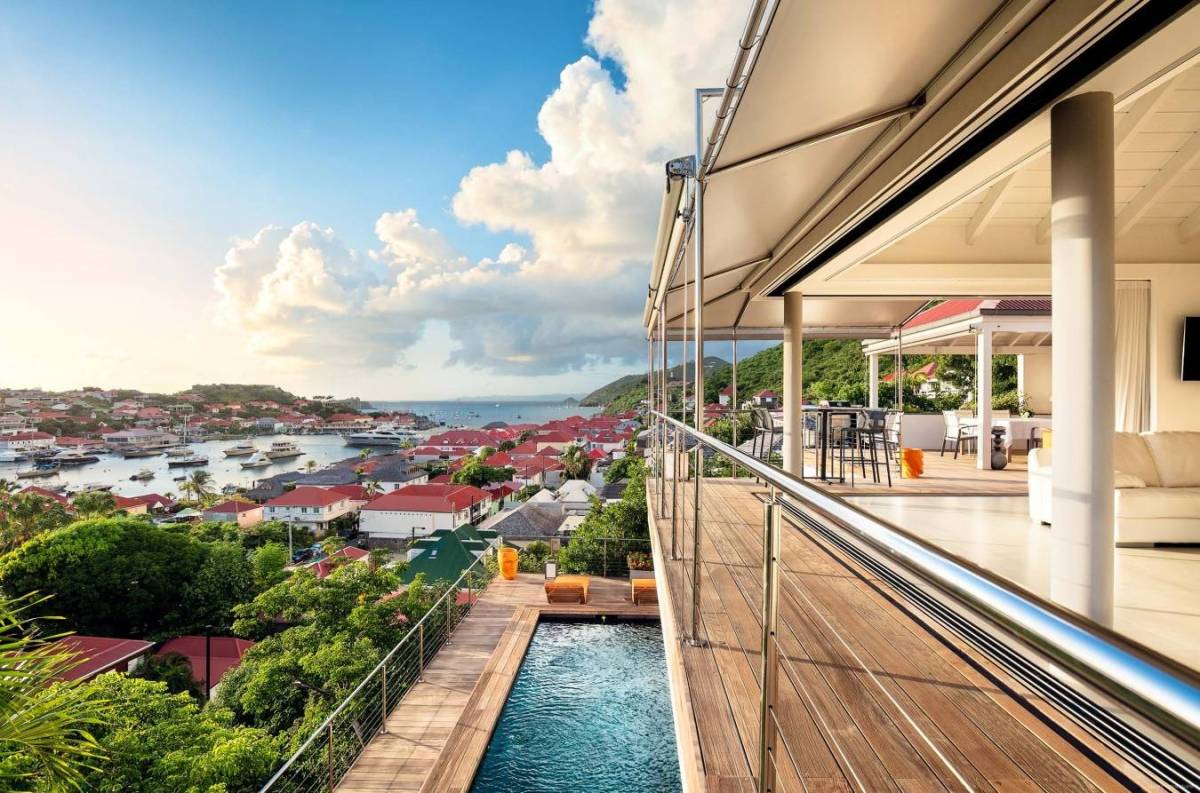
Beyond its beaches and yachts, St Barts keeps a quieter heritage, inherited from a century of Swedish rule. BARNES St Barts takes you to the forts, monuments and museums that tell its other story.
From Gustavia to Corossol, these sites lie just minutes apart and trace the Swedish heritage of St Barts.
Gustavia owes its name to King Gustav III of Sweden. The island remained under Swedish rule from 1784 to 1877. Around the harbour, stone warehouses and grid-pattern streets still recall that era. The Swedish bell tower, a listed monument since 1995, holds a bell cast in Sweden in 1799 and installed in 1800, in honour of Queen Sophia Magdalena. Nearby, the Governor's House echoes the same administrative past.
Gustavia keeps two listed religious buildings. The Catholic church of Notre-Dame-de-l'Assomption, completed in 1829 after five years of work, raises its bell tower above the harbour. A few streets away, the St Bartholomew Anglican Church, built in 1855 with stone brought from St Eustatius, reflects the cultural diversity inherited from the Swedish-era merchants.
To defend Gustavia, the Swedes built several forts above the harbour. Fort Gustav III, whose battery dates from 1787, watched over the entrance to the bay and still keeps the remains of a lighthouse. Fort Karl, built in 1789 on a rocky hill to the south, protected the town from attacks by sea. Fort Oscar, now home to the gendarmerie, completes this defensive ensemble. The climb follows short hiking trails in St Barts and is rewarded with sweeping views over the bay and the Caribbean Sea, finest at sunset.
Built around 1820, the Dinzey House, nicknamed Le Brigantin, is one of the few buildings that survived the great fire of 2 March 1852. It was the first home on the island listed as a historic monument, in 1990, and bears the name of its first owner, Richard Dinzey. Carefully restored, it belongs to Sweden's honorary consul, a sign of the island's bond with its Scandinavian heritage.
Set on the first floor of the Wall House, next to the Hôtel de la Collectivité, the Territorial Museum occupies an 18th-century building restored in 1995. Its rooms retrace the island's development through documents, photographs, costumes and period objects, alongside temporary exhibitions such as the Salon des Artistes. Admission is free, Monday to Saturday. The Territorial Museums website lists the programme.
A few minutes north of Gustavia, Corossol has kept the face of a fishing village. Painted doris boats still line the shore and artisans weave the latanier palm. The Seashell Museum gathers more than 9,000 specimens from seas around the world, while the sheltered brown-sand beach rounds off the visit.
The first place settled on the island, back in 1648, Lorient keeps the face of a quiet village. Its Notre-Dame-de-l'Assomption church has a bell tower built in 1850 that long served as a landmark for sailors, with a bell cast in Nantes in 1860. The tower is a listed monument. Beside it, the seaside cemetery draws visitors who come to pay respects at the grave of Johnny Hallyday, facing the sea. To set these places in time, our article traces the history of St Barts.
Beyond its built heritage, St Barts also reveals itself from its heights. Morne de Vitet, the island's highest point at 286 metres, offers one of the finest panoramas over the Caribbean Sea. Along the shore, the bays of Saline, Gouverneur, Colombier and Shell Beach are among the most photographed. To explore them one by one, discover the most beautiful beaches in St Barts.
Those who return to St Barts every year know it well, St Barts reveals itself as much in its forts and lanes as on its beaches. Taking time to wander Gustavia means extending the discovery between swims and other things to do in St Barts.
To explore this heritage at your own pace, staying here changes everything. BARNES St Barts offers seasonal rentals in St Barts, close to Gustavia, with a concierge service to arrange visits and excursions.
Did this article make you long for St Barts? Find our next discoveries, between heritage and the art of living, in our newsletter.


Add your comment