
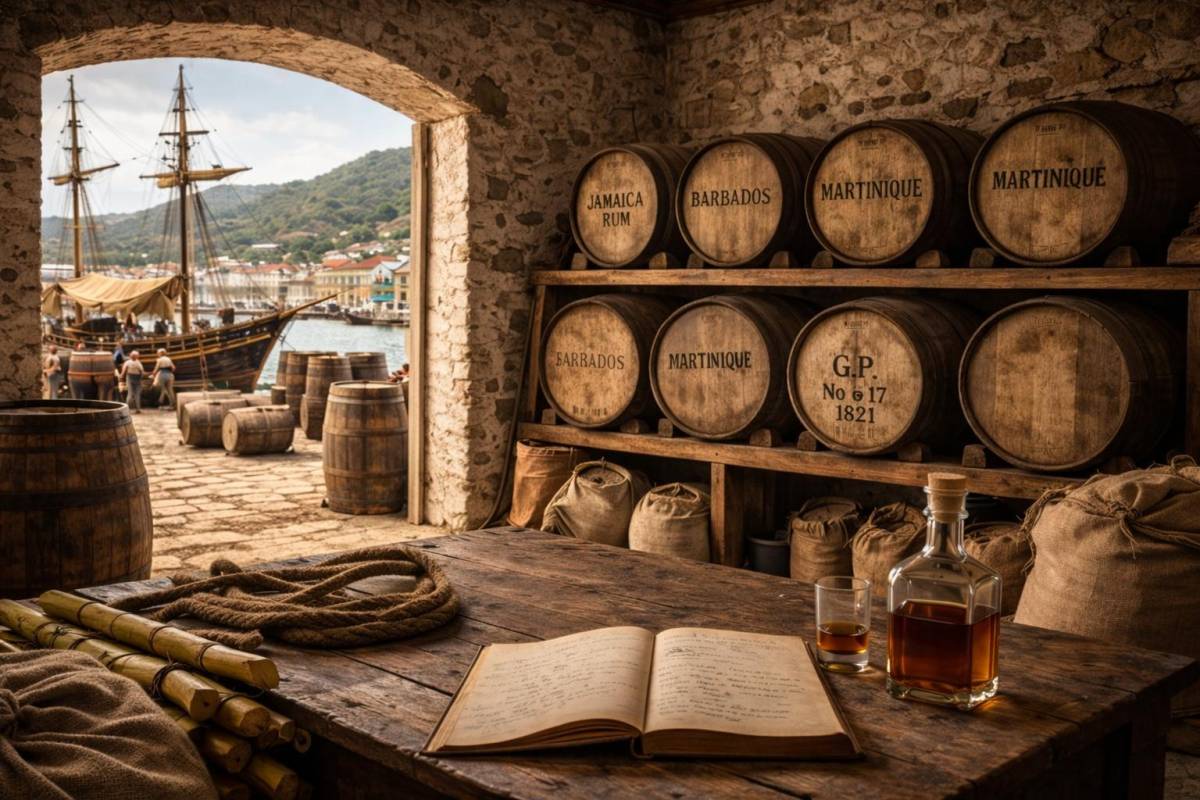
On the quays of Gustavia, in the stone warehouses lining the harbour, thousands of rum barrels passed through for nearly two centuries. Yet Saint-Barthélemy never produced a single drop of this spirit. No sugarcane, no distillery, no plantation. And it is precisely this paradox that makes the history of rum in St Barth so fascinating. From a Swedish free port where rum flowed freely to the largest rum bar in the Caribbean, the island has woven a deep bond with this spirit that tells, better than any history book, its extraordinary trajectory. BARNES Saint-Barthélemy invites you to trace the thread of this remarkable story.
When Sweden took possession of Saint-Barthélemy in 1784, the island was nothing more than an arid rock of 25 square kilometres inhabited by a few hundred souls. The volcanic soil, battered by the trade winds, was unsuitable for growing sugarcane, the crop that made the fortune of neighbouring islands. But King Gustav III of Sweden had a vision: to transform this rock into a free port, a haven of tax-free trade in the heart of the West Indies.
The effect was immediate. From 1785 onwards, Gustavia became a hub of Caribbean commerce. Merchant ships from every nation stopped there to exchange their cargo without paying customs duties. And among those goods, rum held a central place. Barrels arrived from Martinique, Guadeloupe, Jamaica, and Barbados, passing through Gustavia's warehouses before heading on to Europe and North America.
At the height of the Swedish era, the port of Gustavia welcomed up to 800 ships per year. The warehouses overflowed with rum, sugar, coffee, and spices. The island boasted nearly 6,000 inhabitants, dozens of shops, three newspapers, and even a theatre. Gustavia was then one of the busiest ports in the Caribbean, and rum was its lifeblood.
For the people of Saint-Barthélemy, rum was not merely a trade commodity. It was a daily companion, a remedy, a currency of exchange. Fishermen took a bottle out to sea. Women used it as a rub against fevers. It was drunk neat at dawn, mixed with coconut water at nightfall. The ti'punch, that blend of agricole rum, fresh lime, and cane sugar, became the island's sacred ritual, the drink that sealed deals, celebrated births, and accompanied funeral vigils.
The retrocession of the island to France in 1878 ended the free port status and marked the beginning of a long decline. Without tax advantages, trade collapsed. Gustavia emptied. The population fell to a few hundred families surviving on fishing, straw hat making, and salt harvesting. Rum remained one of the few accessible pleasures, a tenuous thread connecting these decades of poverty to the Swedish golden age.
For nearly a century, Saint-Barthélemy lived in oblivion. The island had no airport, no electricity, no running water. Houses were built of wood, paths were unpaved. And yet, in every home, rum was there. It was the link to the neighbouring islands from which bottles arrived on schooners, the last vestige of a trade that had once made Gustavia great.
The story took a dramatic turn in 1957 when David Rockefeller purchased land on the hills of Colombier for the paltry sum of 32,500 dollars. The American billionaire discovered what the Saint-Barths had always known: an untouched natural beauty, a perfect climate, and an art of living where simplicity met authenticity. Rémy de Haenen, an adventurous aviator turned mayor of the island, built the first landing strip on the hillside of Saint-Jean. The island opened to the world.
In the decades that followed, Saint-Barthélemy gradually transformed. The first villas appeared. Boutique hotels settled in. The jet set discovered this discreet little paradise and made it their refuge. But rum did not disappear with the arrival of luxury. It reinvented itself. The ti'punch once sipped at the harbour bistro was now savoured at sunset on the terrace of a villa overlooking the bay of Saint-Jean. Everyday trading rum gave way to exceptional vintages, rare cuvées, and blends by master distillers from across the Caribbean.
That is the magic of Saint-Barthélemy: the island never disowned its heritage. It elevated it. Rum is no longer a necessity; it has become an art of living. And it is this alchemy between tradition and refinement that defines the spirit of the island today.
Saint-Barthélemy is now home to the largest rum bar in the Caribbean. The Rhum Room, tucked away in a discreet alley in Gustavia, lines up over 700 bottles behind its counter. From agricole rums of Martinique to small-batch productions from Grenada, from 1950s vintages to the latest creations by master distillers, each bottle tells a story. The atmosphere is that of a tropical speakeasy, intimate and hushed, where connoisseurs gather for guided tastings that can last for hours.
Every year, the St Barth Rhum Festival brings together the finest distilleries in the region for an event that has become unmissable. Over three days, masterclasses, tastings, and cocktail competitions transform the island into the world capital of rum. Master blenders from Clément, J.M, Trois Rivières, and Diplomatico present their latest creations alongside independent producers from every corner of the Caribbean archipelago.
Beyond the bars and festivals, rum courses through the daily life of Saint-Barth. The ti'punch remains the sacred aperitif ritual, prepared by hand with freshly squeezed lime and cane sugar dissolved at the bottom of the glass. Bartenders at the island's finest establishments compete in creativity to craft rum-based signature cocktails. And local brands like Ti Rhum keep the island's identity alive through bottles that visitors bring home as souvenirs or gift to those who dream of St Barth.
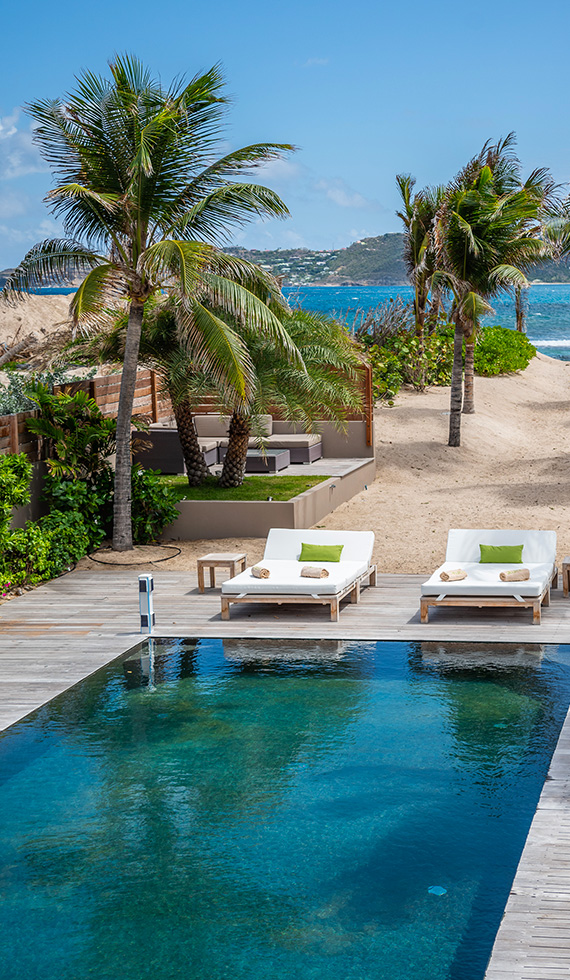
A ti'punch prepared on the terrace of your villa at sunset, feet in the grass and gaze lost over the ocean. A tasting evening among friends, arranged by your private concierge with a sommelier specialising in exceptional rums. A poolside lunch punctuated by a planter's punch made with the rum you brought back from the Rhum Room the night before. This is the life our clients live in Saint-Barthélemy.
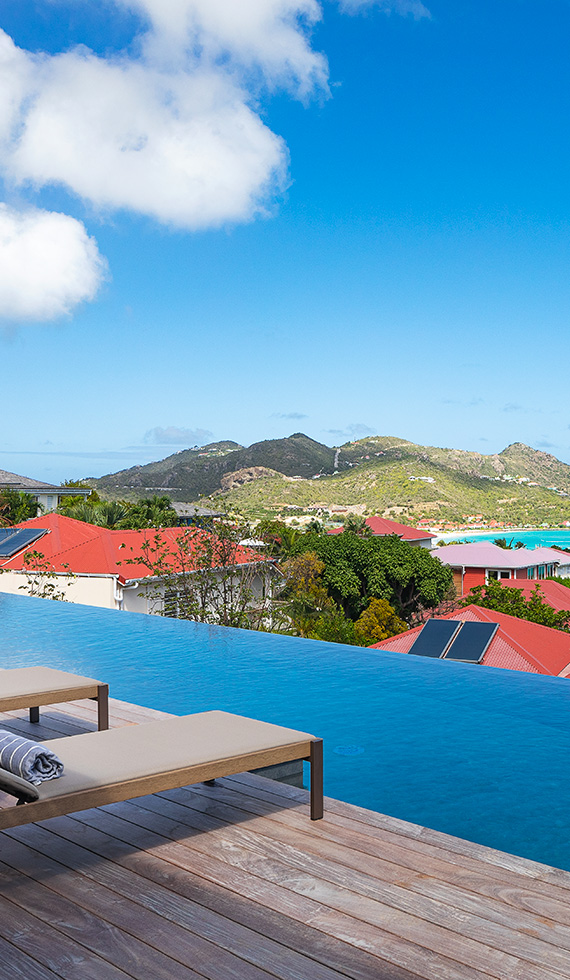
Our agency offers an exclusive selection of seasonal rental villas in Saint-Barthélemy across the entire island. Whether you dream of a villa on the heights of Gustavia with views over the harbour where barrels once transited, or a retreat facing the ocean on the leeward coast, each property is an invitation to experience the St Barth art of living at your own pace.
Our concierge services in St Barth take care of everything: reservations at the Rhum Room, registration for the St Barth Rhum Festival, private tastings organised at your villa, and much more. Discover also our exceptional properties for sale in Saint-Barthélemy to make this island your home port.


Add your comment